The Complete Push Pull Legs Program: 3-Day and 6-Day
A complete push pull legs program in 3-day and 6-day versions: every workout with sets, reps, rest and RIR, who it suits and how to progress on it.
In brief
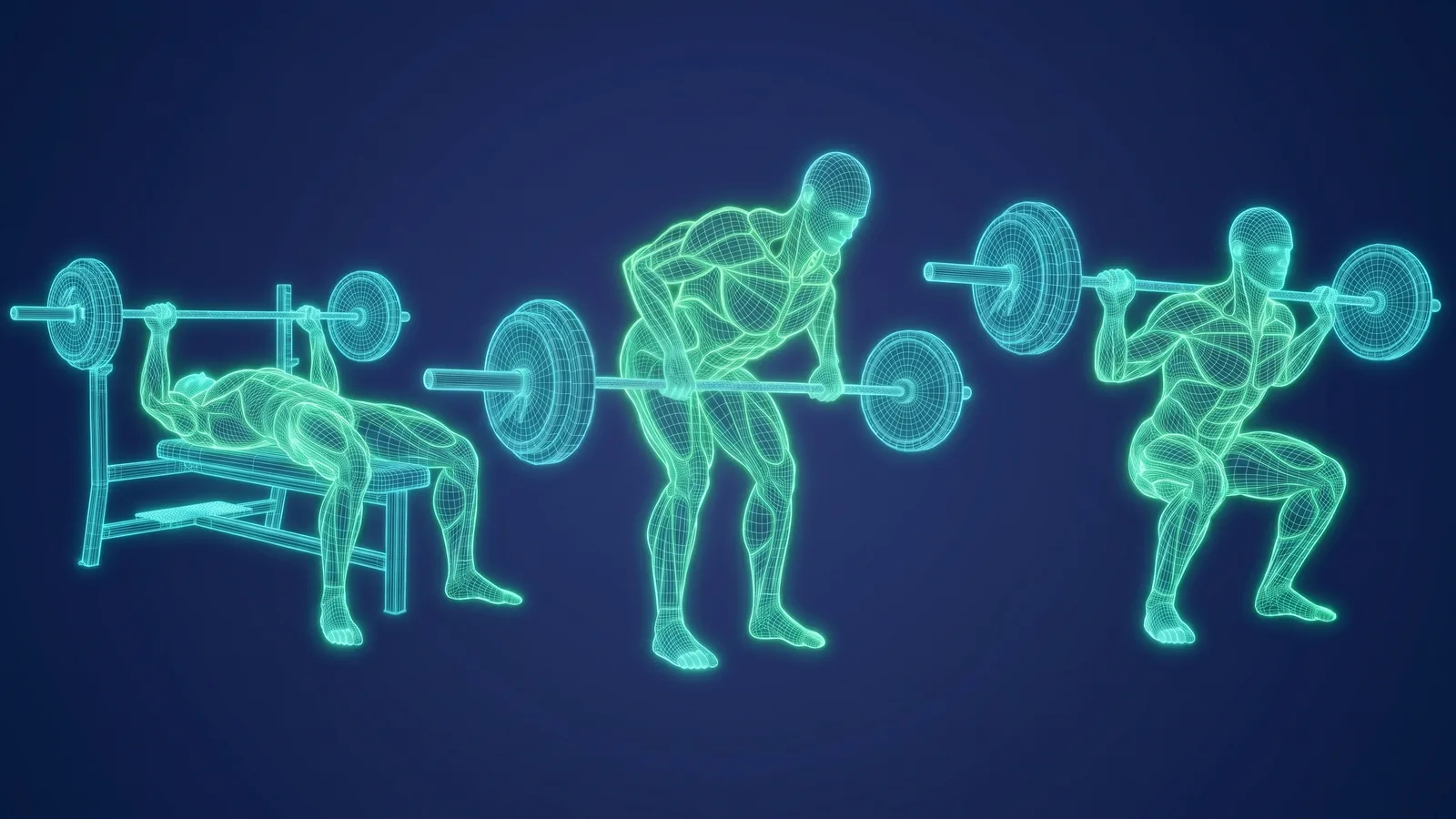
- A push pull legs program splits training into three workouts: Push (chest, shoulders, triceps), Pull (back, rear delts, biceps) and Legs (quads, hamstrings, glutes, calves).
- The 3-day version trains each muscle once a week with 15 to 18 sets per workout; the 6-day version trains each muscle twice with shorter sessions.
- PPL suits lifters with about a year of experience. You progress on it with double progression, 1 to 3 reps in reserve, and a deload every 6 to 8 weeks.
The push pull legs program is the most widely used split in the gym for a simple reason: it groups the muscles that work together, so no two consecutive sessions hit the same muscles and each workout can carry real volume. This guide gives you both complete versions, 3-day and 6-day, with exercises, sets, reps, rest times and RIR, then covers who it fits and how to keep progressing on it.
What is a push pull legs program?
A PPL organises exercises by movement pattern rather than by muscle. Push covers everything that presses away from you: bench presses, overhead presses, lateral raises, triceps extensions. Pull covers everything that pulls toward you: pull-ups, rows, face pulls, curls. Legs covers the whole lower body: quads, hamstrings, glutes and calves.
The payoff is twofold. Secondary muscles are already warm when you reach their isolation work, since your triceps have pressed before you extend them. And because back-to-back sessions never load the same muscles, you can train six days in a row without one workout wrecking the next.
3-day or 6-day PPL: which one should you run?
The difference is frequency, meaning how many times a muscle is trained in a week. On the 3-day version (Monday Push, Wednesday Pull, Friday Legs) each muscle is hit once. On the 6-day version (Push, Pull, Legs, Push, Pull, Legs, rest) each muscle is hit twice.
| 3-day PPL | 6-day PPL | |
|---|---|---|
| Frequency per muscle | Once a week | Twice a week |
| Session length | 70 to 90 minutes | 50 to 65 minutes |
| Sets per session | 15 to 18 | 14 to 16 |
| Sets per muscle per week | 8 to 12 | 12 to 20 |
| Recommended level | 1 year of training | Intermediate to advanced |
| Main constraint | Long sessions | Recovery and sleep |
The research helps you decide. The 2016 meta-analysis by Schoenfeld, Ogborn and Krieger found that training a muscle twice a week produced more hypertrophy than once a week. Their 2019 meta-analysis added a key nuance: when weekly volume is equated, frequency no longer makes a significant difference. In other words, total hard sets per week is what matters; frequency is mostly a way to distribute that volume without sessions that drag on for two hours. Our guide on how many sets per muscle per week gives the weekly numbers.
In practice: with three gym slots, a dense 3-day PPL works. With six slots and good recovery, the 6-day version lets you accumulate more volume in shorter, higher-quality sessions.
The 3-day push pull legs program
RIR stands for reps in reserve: the number of reps you could still have done at the end of a set. RIR 2 means you stop two reps short of failure. This scale, described by Helms and colleagues (2016), lets you control effort without grinding every set to failure.
Push workout (chest, shoulders, triceps)
| Exercise | Sets | Reps | Rest | RIR |
|---|---|---|---|---|
| Barbell bench press | 4 | 6 to 8 | 3 min | 2 |
| Incline dumbbell press | 3 | 8 to 10 | 2 min | 2 |
| Seated dumbbell shoulder press | 3 | 8 to 10 | 2 min | 2 |
| Lateral raise | 3 | 12 to 15 | 60 s | 1 |
| Cable triceps pushdown | 3 | 10 to 12 | 60 s | 1 |
| Overhead triceps extension | 2 | 12 to 15 | 60 s | 1 |
Pull workout (back, rear delts, biceps)
| Exercise | Sets | Reps | Rest | RIR |
|---|---|---|---|---|
| Pull-up or lat pulldown | 4 | 6 to 10 | 3 min | 2 |
| Barbell row | 3 | 8 to 10 | 2 min | 2 |
| Seated cable row | 3 | 10 to 12 | 90 s | 2 |
| Face pull | 3 | 15 to 20 | 60 s | 1 |
| EZ-bar curl | 3 | 8 to 10 | 90 s | 1 |
| Hammer curl | 2 | 10 to 12 | 60 s | 1 |
Leg workout (quads, hamstrings, glutes, calves)
| Exercise | Sets | Reps | Rest | RIR |
|---|---|---|---|---|
| Barbell back squat | 4 | 6 to 8 | 3 min | 2 |
| Romanian deadlift | 3 | 8 to 10 | 2 to 3 min | 2 |
| Leg press | 3 | 10 to 12 | 2 min | 2 |
| Lying leg curl | 3 | 10 to 12 | 90 s | 1 |
| Standing calf raise | 4 | 12 to 15 | 60 s | 1 |
Rest times are not filler. In trained men, Schoenfeld and colleagues (2016) measured greater strength and hypertrophy with 3-minute rests than with 1-minute rests on the same exercises. Keep rests long on the heavy compounds and shorter on isolation work.
The 6-day push pull legs program (hybrid)
The 6-day version uses the three workouts above as the A days, dropping one set from the first exercise, and adds three lighter B days in the 10 to 15 rep range. It is called a hybrid because each muscle group gets one heavy session and one higher-volume session in the same week. The order is Push A, Pull A, Legs A, Push B, Pull B, Legs B, then a rest day.
Push B workout
| Exercise | Sets | Reps | Rest | RIR |
|---|---|---|---|---|
| Incline barbell press | 4 | 10 to 12 | 2 min | 2 |
| Dips or machine chest press | 3 | 10 to 12 | 2 min | 1 |
| Seated shoulder press | 3 | 10 to 12 | 90 s | 2 |
| Cable lateral raise | 3 | 15 to 20 | 60 s | 1 |
| Rope triceps pushdown | 3 | 12 to 15 | 60 s | 1 |
Pull B workout
| Exercise | Sets | Reps | Rest | RIR |
|---|---|---|---|---|
| Wide-grip lat pulldown | 4 | 10 to 12 | 2 min | 2 |
| Chest-supported row | 3 | 10 to 12 | 90 s | 2 |
| Single-arm cable row | 3 | 12 to 15 | 60 s | 1 |
| Rear delt fly | 3 | 15 to 20 | 60 s | 1 |
| Incline dumbbell curl | 3 | 12 to 15 | 60 s | 1 |
Legs B workout
| Exercise | Sets | Reps | Rest | RIR |
|---|---|---|---|---|
| Hack squat or leg press | 4 | 10 to 12 | 2 min | 2 |
| Bulgarian split squat | 3 | 10 to 12 per leg | 90 s | 1 |
| Seated leg curl | 3 | 12 to 15 | 60 s | 1 |
| Leg extension | 3 | 12 to 15 | 60 s | 1 |
| Seated calf raise | 4 | 15 to 20 | 60 s | 1 |
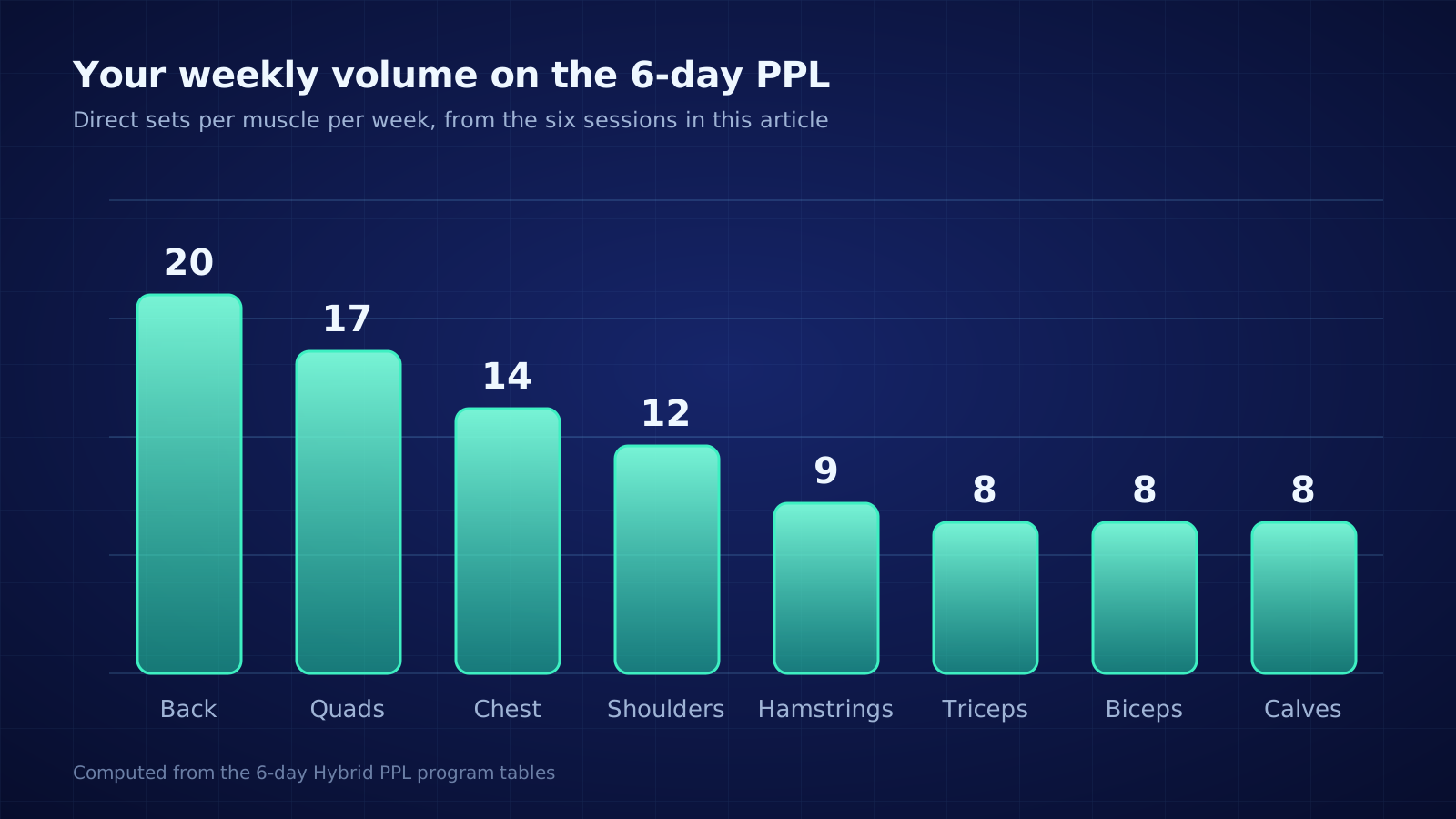
The lighter loads on B days are not a compromise. The review by Schoenfeld and colleagues (2021) shows that a set of 10 to 15 reps taken close to failure builds as much muscle as a heavy set. Across the week, chest gets 13 to 14 sets, back 14, quads around 13, and shoulders and arms between 9 and 12 once you count indirect work. That lines up with the dose-response relationship reported by Schoenfeld, Ogborn and Krieger (2017): more than 10 sets per muscle per week produced clearly larger gains than fewer than 5.
Who is push pull legs for?
PPL assumes you can already perform the basic lifts with sound technique: squat, bench press, row, pull-up. A complete beginner grows faster on a full-body program three times a week, where every movement gets practised more often. After six months to a year of consistent training, the 3-day PPL is the natural next step.
The 6-day version is for people who recover well: solid sleep, enough calories and protein, low outside stress. If you show up tired to half your sessions, drop to 4 or 5 days (the cycle simply rolls over from one week to the next) or go back to three. The most effective program is the one you can hold for twelve straight weeks.
How do you progress on a PPL?
The most reliable method is double progression. Each exercise has a rep range, say 6 to 8. You keep the same weight until you hit the top of the range on every set at the planned RIR, then you add 2.5 kg (5 lb) on upper-body lifts or 5 kg (10 lb) on lower-body lifts and start again from the bottom of the range. On a cable isolation, one pin up is enough.
This only works if you know your last performance on each exercise. Without a log you guess; with a history you know exactly what to attempt. We go into this in why you should log every workout.
In S-Load A ready-made 3-day PPL and a 6-day Hybrid PPL are built into the app, or you can create your own from the tables above. During the workout, last session's loads are pre-filled, the rest timer starts on its own, and the app flags your weight and rep records. The weekly volume per muscle shows whether your PPL is actually covering every group.
When should you deload?
Every 6 to 8 weeks, or as soon as two consecutive sessions go backwards on the same lift despite decent sleep, take a lighter week: same exercises, half the sets, loads reduced by 10 to 20 percent. You then resume with the pre-deload weights, often with a rep to spare. If the bench press is the first lift to stall, our guide on breaking a bench press plateau lays out specific fixes.
Common push pull legs mistakes
- Too little volume on 3 days. Four exercises of three sets on Push day gives your chest 6 sets for the whole week. At a frequency of one, every session has to be dense.
- Too much volume on 6 days. Running the full 3-day workouts six times a week pushes past 30 sets per muscle; fatigue piles up and technique falls apart.
- Going to failure on everything. RIR 0 on a heavy squat costs more than it returns. Save failure for the last set of isolation exercises.
- Cutting rests short. One minute between bench press sets steals reps from the following sets, which means less useful volume.
- Rotating exercises every week. If you never repeat the same movement, you cannot measure progress on it.
- Skipping Leg day. It is the most demanding session of the cycle and the one that pays back the most.
Pick your version, log your first workout, and run double progression for twelve weeks before you judge the program. All our guides are on the S-Load home page.
FAQ
Is a 3-day push pull legs program enough to build muscle?
Yes, as long as each workout carries enough volume. With 15 to 18 sets per session, every muscle gets 8 to 12 sets a week, which sits inside the range that drives hypertrophy. The 6-day version lets you go further, but the 3-day version is a strong program when your schedule is tight.
Do I need to be advanced to run a 6-day PPL?
You mainly need to recover well: enough sleep, enough food and at least a year of consistent training. A beginner grows just as fast on three sessions a week with far less fatigue. Move to six days when three days stop producing progress.
What if I miss a workout on my PPL?
Shift the cycle, do not skip the session. If you miss Wednesday's Pull day, do it Thursday and carry on in order. On a PPL the Push, Pull, Legs sequence matters more than the day of the week.
How long should I stay on the same PPL program?
At least 8 to 12 weeks, long enough for progress on each lift to become readable. Swap an exercise when it has stalled for three weeks despite logged loads and reps, not because you are bored of it.
Where does the deadlift go in a push pull legs split?
The conventional deadlift belongs on Pull day because it loads the back heavily. The Romanian deadlift, which targets the hamstrings, belongs on Leg day. Avoid doing both heavy in the same week when you first start the program.
Can I add cardio to a PPL?
Yes. Two or three sessions of 20 to 30 minutes at moderate intensity will not stop you from building muscle. Do them after lifting or on a rest day, and keep hard cardio away from the hours before a Leg day.
Sources
- Schoenfeld BJ, Ogborn D, Krieger JW. Effects of Resistance Training Frequency on Measures of Muscle Hypertrophy: A Systematic Review and Meta-Analysis. Sports Medicine, 2016. DOI 10.1007/s40279-016-0543-8 — PubMed 27102172
- Schoenfeld BJ, Ogborn D, Krieger JW. Dose-response relationship between weekly resistance training volume and increases in muscle mass: A systematic review and meta-analysis. Journal of Sports Sciences, 2017. DOI 10.1080/02640414.2016.1210197 — PubMed 27433992
- Schoenfeld BJ, Grgic J, Krieger J. How many times per week should a muscle be trained to maximize muscle hypertrophy? A systematic review and meta-analysis. Journal of Sports Sciences, 2019. DOI 10.1080/02640414.2018.1555906 — PubMed 30558493
- Helms ER, Cronin J, Storey A, Zourdos MC. Application of the Repetitions in Reserve-Based Rating of Perceived Exertion Scale for Resistance Training. Strength and Conditioning Journal, 2016. DOI 10.1519/SSC.0000000000000218 — PubMed 27531969
- Schoenfeld BJ, Pope ZK, Benik FM, et al. Longer Interset Rest Periods Enhance Muscle Strength and Hypertrophy in Resistance-Trained Men. Journal of Strength and Conditioning Research, 2016. DOI 10.1519/JSC.0000000000001272 — PubMed 26605807
- Schoenfeld BJ, Grgic J, Van Every DW, Plotkin DL. Loading Recommendations for Muscle Strength, Hypertrophy, and Local Endurance: A Re-Examination of the Repetition Continuum. Sports (Basel), 2021. DOI 10.3390/sports9020032 — PubMed 33671664